Showing posts with label mint. Show all posts

Monday, October 11, 2010

The Nurturing Bath

There's nothing quite so relaxing as a nice hot bath, accompanied by the gentle glow of light from a bathroom full of lit candles. In addition to bathing the body, baths can be ritually cleansing to prepare for the sacred circle, emotionally cleansing to free the mind of stress and troubles, and physically healing to free the body of toxins and negative conditions. Aromatic remedies are among the most ancient. Old herbal texts prescribed the calming scents of thyme and sage leaf to ease the terror of nightmares (known as "night ghosts") and bald men were told if they washed their heads with sage tea they could be assured that their hair would indeed grow back. While this last one may not be true, herbal bath remedies can cure much that ails us.

Basic Bath Time Herbal Tea Bags

1/2 cup fresh grated ginger root
2 tablespoons of one or more of the following herbs (or use your own favorites):
lemon verbena (dried)
rosemary sprigs (fresh or dried)
peppermint or spearmint leaves (fresh or dried)
chamomile (dried)
lavender blossoms or sprigs (dried)
lemon balm (dried)
sweet marjoram (dried)
grated goldenseal root (dried)
plaintain leaves (dried)
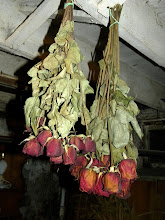
rose petals (fresh)

You may use a small cheesecloth bag tied with a string, or make small folded rice paper packets (in the style of a store-bought tea bag), stitched closed. Combine the ginger root with the herbs of your choice and place in the sachet style of your choice. Run a very hot bath, add a few small bags, allow them to steep while the water cools a bit, then remove the bags and climb on in. Made as small tea bags with strings, these make wonderful gifts to give to someone who loves herbal baths (just be sure to label your ingredients so your recipient knows what's in them and let them know these aren't to be consumed internally).

If you haven't the time or motivation to make yourself bath time tea bags, a simple herbal bath will also work wonders and feel great. You can add sprigs of fresh rosemary to your bath for a pine-like fragrance. Actual pine needles can be used as well which are said to relieve nervous tension. Rosemary is not only invigorating, but will ease physical aches and pains and can rejuvenate a tired, sallow complexion. Ginger root will break a fever, induce sweating, improve your circulation and will also ease sore joints and tired feet.

Native Americans took sponge baths decocted with verbena leaves to combat nervousness and tension. Calendula, comfrey and chamomile used separately or together will also calm nerves and are an excellent choice as an astringent bath for oily or blemished skin. Chamomile is also an effective cure for soothing hemorrhoids.

Elder flowers steeped in hot water will make a gently cleansing and sweetly floral scented bath that will help induce sleep and relax the nerves, as will lemon balm, which in addition to being a sleep aid can also help to relieve cramps.

To soften the skin and counteract both hard water and some of the stronger herbs, add some milk to your bath (Cleopatra bathed regularly in camel's milk and she had men falling at her feet).

Please note that if this is the first time you'll be using any of these herbs, it is best to perform a 24 hour skin test beforehand for each plant. Take a small amount of the herb to be used, pulverize it and if it's in dried form add a few drops of water to moisten it. Dab the paste onto your forearm just inside your elbow, cover with a band-aid and let it sit untouched for 24 hours. If any redness, itching or swelling occurs, do not use that herb. As always, use common sense when working with herbs. Take nothing internally without being absolutely sure it's edible and safe and use nothing that you feel you may be allergic to.

Photo courtesy of floraleads.com

Thursday, February 11, 2010

Indoor Herb Garden

Once again it's that time of year when it's impossible to go anywhere and not see an enormous display of this year's seeds: colorful packets upon packets of flowers, veggies and herbs. While I grow a few herbs out in my gardens with my flowers, it's been a few years since I've had an indoor windowsill herb garden of my very own. This is because I have a cat who is incapable of leaving well enough alone and while I love my cat, I miss having within my kitchen the scent of fresh herbs and clean soil.

Here is a list (and it's by no means comprehensive) of some of the more commonly used herbs. I've chosen only those herbs that grow well in small pots, are safe for children or pets who are curious, hungry or destructive just for the sake of being destructive, are used for magickal purposes and also can double for cooking (or brewed as teas) as well. While there are others that top most folks' lists, they're roots, flowers, or poisonous if ingested. Some are simply far too large for a little indoor garden.

Rosemary. If you grow nothing else, grow rosemary for it's the Queen Mother of magickal herbs and is very powerful. It cleanses and purifies, works well in healing and love spells, increases mental and psychic powers and tastes delicious in dishes. Dried, crushed rosemary is the perfect simple incense for burning in ritual and is a perfect substitute for frankincense, an ingredient used in a lot of spells.

Basil. Basil is great for love divinations, wealth spells, exorcising evils spirits and negative energies, purification spells and luck.

Catnip. Catnip is a powerful component in love and beauty spells and when hung in your home attracts good luck as well as positive energy and gentle spirits. Grow as an offering to your familiar or family pet and maybe kitty will stay away from all your other herbs! It's believed that when you give your cat catnip you will forge a psychic bond between the two of you that can't be broken.

Dill. A protective herb that is also powerful in money spells, as well as love and lust divination.

Fennel. Fennel confers protection, purification and works well in healing spells.

Lavender. Lavender is an incredibly versatile herb used in protection and purification spells, longevity work, healing spells, and brings peace, calm and happiness to the home it's grown in and all the inhabitants within. If you wish, lavender will help you to see ghosts. It can be used in more mundane ways as well, such as in sachets, pillows and poppets.

Mints. Mint is used in protection spells, for travel safety, to exorcise evil spirits, in money spells and to heal. Peppermint heals headaches and encourages sleep. Spearmint is best for upper respiratory ailments and to sharpen mental powers. Wintergreen removes hexes and curses and when placed on your altar will aid your magick.

Thyme. Burn thyme as a simple ground incense to attract good health. Use it for healing spells, sound sleep, to increase psychic powers, and to give you courage and energy. The ancient Greeks burned thyme in their temples to purify both the building and its occupants prior to ritual and you can do the same. Thyme is a wonderful cleansing herb.

You might have noticed that sage is not on this list. That's because it is unlucky to plant your own sage. If you can't get someone else to plant and tend it for you, leave it be and buy what you need as you need it or else you risk very bad luck befalling you and your loved ones. If you do choose to grow sage yourself, be sure to grow another plant in the pot or plot with it as a full bed of sage also brings ill luck. When handled properly, sage can be used in spells to make your wishes come true, for wisdom, longevity and immortality.

Photo courtesy of dogeared on flickr.