Showing posts with label altar. Show all posts

Friday, December 24, 2010

Yule Altar


This year's Yule altar, photographed on the night of the Winter Solstice. I had a small white snow bird on it, made of delicate German glass, with real feathers for a tail. It had been a Christmas tree decoration that belonged to my mother until its clasp broke and then spent years languishing in a box of discarded ornaments until I found it a couple of weeks ago and decided it would be lovely on my altar. My joy was rather short-lived though, as I bumped the sideboard and knocked the little bird to the floor where it sadly shattered into hundreds of tiny slivers of silvery glass. Perhaps I'll find a new bird for next year's altar.

Monday, December 13, 2010

Trees 101: The Yew

Personally, I'm not a big fan of yews as to me their foliage smells too much like cat pee, but that doesn't mean that they aren't a magnificent tree to behold, nor hold a great deal of power within them. This is truly a tree of the Winter Solstice as the yew's spring season begins on the day after the solstice. Given that the darkest time of the year is when this tree begins its rebirth, it's considered a Goddess tree (with the Goddess in her crone form) as well as a tree of death. Ironically, this is also a tree of immortality as being an evergreen, it never seems to die in going dormant. All evergreens are considered to be trees of immortality. In ancient times, yews were traditionally planted in burial grounds as it was believed to be a gateway to the next world.

The yew has been used to make bows, arrows, spears and magic wands. The witches in Shakespeare's Macbeth used wands made of yew to work their magic. Along with the birch and oak, the yew was the third tree in the three pillars of wisdom. The yew is symbolic of stability, sovereignty, and mystery. Yew wood has also been used to make household items such as bowls, shutters, boxes, handles and hooks, and various religious and altar objects. It has been rarely used to make furniture. Yew leaves and bark, as well as the tree's seeds are all poisonous to humans and should never be ingested. However, at one time the skin of yew berries was used as a laxative and a heart medicine. Traditionally, to dream of yews is a portent of death, either one's own or that of a loved one.

The yew vibrates to both masculine and feminine energies. It is ruled by Jupiter, Mars and Saturn and is governed by the elements of air, water and fire. Yew can be used in ritual to enhance psychic abilities, to bring one closer to their ancestors at Samhain, and in protection spells. When using yew in any magickal capacity, remember to never ingest any part of the tree and to wash your hands well after handling it.

"Ancient Yew" courtesy of Giles C. Watson on flickr.

Monday, November 1, 2010

Day of the Dead


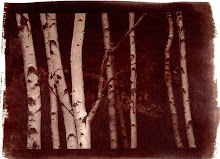
Here are a few photos of this year's Samhain/Day of the Dead altar. I believe that this is my favorite sabbat of the year mostly because of the deep connection I feel with my ancestors and with those loved ones who have recently (or not so recently) passed from my life. To sit before this altar, burning sage, lighting black candles, and meditating on those I wish I had known and those I dearly, dearly miss is very moving. I practice divination in front of it during the days around the sabbat and then I take the cornmeal and tobacco I place on it to honor my Native American ancestors and spread them on the earth beneath the birches at the back of my property. A part of me wishes that this time of year lasted longer than it does, but then, if it was of a longer duration it probably wouldn't be nearly as magickal as it is. So until next year...

Monday, September 20, 2010

More on Mabon

Thinking about working a little magick for Mabon? This is an especially appropriate time to work spells for protection, wealth and prosperity, security and self-confidence. For a simple ritual incense burn freshly dried and ground sage, or if you're a little more motivated, use this wonderful incense recipe which will help you become attuned with the changing of the season and the darkening of the light:

2 parts Frankincense
1 part Sandalwood
1 part Cypress
1 part Juniper
1 part Pine
a few drops Oakmoss essential oil
1 small pinch of pulverized, dried oak leaf

Grind all ingredients fairly fine, add the essential oil, mix well, and burn on a charcoal in a censer.


If you prefer to work with gemstones, there are a few that are associated with this sabbat. Use them on your altar, wear them as jewelry, or carry them in a sacred medicine bag while you walk in the golden yellow woods and honor the aging Goddess.

Carnelian. A red form of chalcedony, carnelian has been worn since ancient Egypt. Worn by those who tend to be shy, it bolsters courage and instills the wearer with self-confidence, as well as protecting them from negative outside influences.

Lapis Lazuli. Another ancient stone, lapis is an uplifting stone that promotes spirituality and enhances psychic awareness. This stone also confers protection to its wearer, keeping them safe both physically and psychically.

Sapphire. Used by those in ancient Greece, the sapphire is potent in aiding meditation, in spells for defensive magick and in attracting money. Wear a sapphire to expand your wisdom, promote a sense of peace and well-being within you, and to keep evil spirits at bay. A necklace or bracelet made of sapphires will attract money to its wearer.

Yellow Agate. Agate is a stone of quiet courage and strength, as well as protection. In ancient Rome, an agate ring was worn on the left hand to ensure the favor of those deities responsible for a bountiful harvest. Wear agate or use it on your altar in protection spells and rituals to be free of negative energy.

Incense recipe courtesy of the late, great Scott Cunningham.
Photo courtesy of Markles55 on flickr.

Sunday, September 19, 2010

A Bit About Mabon

Is it really Mabon again? Egads, the year flies by, doesn't it? After another summer of intense heat, which is really not to my liking, we are again at that point on the Wheel of the Year where I come alive once more. Autumn is most definitely my season, which is not surprising really as I am a deeply introverted person who spends a great deal of time inside her own head. So it makes perfect sense that I would thrive in that portion of the Earth Wheel where things are becoming quiet and resting within themselves for the dark of winter. Samhain is my favorite sabbat of the year, but Mabon can sort of be viewed as the "gateway" to Samhain, and that's good enough for me.

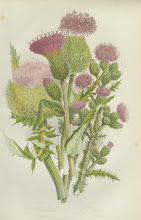
Mabon, a lesser sabbat, is also known as the Second Harvest Festival (after Lammas). It represents the balance between the darkness and the light; of perfect equality. The foods of Mabon are corn, potatoes, nuts, apples and onions. Bread is, of course, a must. The traditional herbs of this sabbat are thistle, tobacco, myrrh, marigold (to symbolize the last of the bright light) and sage, which should be burned at any rituals. Not surprisingly, the symbols of this sabbat are what we see on every farm stand we pass in our daily travels: gourds, pumpkins, apples, pine cones, and corn stalks. The pomegranate is an important food and decoration for feasts and altars alike, symbolizing fertility, abundance and equanimity.

This is a sabbat of the solitary and the mysterious. Not sure what to do to celebrate? Try making some homemade wine, or take a walk alone in the woods while gathering dried seeds, leaves, branches and berries. You can use these to adorn your house and your altar. Alternately, you can take some of what you have gathered and visit the graves of loved ones now passed and decorate their headstones with the pinecones, leaves and berries, honoring those who have gone before you as a prelude to Samhain. Bake a loaf of bread- even a quick bread of fruit and nuts is nice- and break a slice into pieces, scattering it outdoors (preferably in the woods or on a harvested field, if possible) as an offering to the Goddess who has now matured into the Crone, as well as to give one last thanks for this past season of abundance. In doing this, you'll also be feeding some hungry wildlife on these first few cooler days and nights.

Whatever you choose to do to celebrate this little sabbat, take a moment to reflect on your life and the passing of another season, another year. Dive into the quiet of your mind for a spell, and revel in the last of the light while welcoming the gentle darkness that is quickly coming.

Photo Courtesy of Linder Rox on flickr.

Tuesday, May 25, 2010

The Magickal Garden

Do you have a witch's garden? A place to make offerings to the earth deities? Do you engage in any conscientious garden protection? Well, now is the perfect time to plant even a small garden (if you don't already have one), transform your already existing garden into a place to thank the Goddess and God, and do some simple spellwork to protect all your hard work from negative energies as well as annoying (and hungry) pests. If you're starting from scratch here, you can reference the term "garden" below for a few brief lists of basic plants, but for the sake of time and space, I'll assume you already have a garden to work with. Note that this doesn't have to be a full-sized garden in your backyard. City dwellers can modify some of these practices for a container garden on a terrace or even a kitchen windowsill (though I wouldn't recommend sprinkling vinegar and oils on your kitchen woodwork).

In the center of my witch garden I have an antique sundial that was given to us by a friend and on which I place offerings to the deities, burn incense, and even use as a table of sorts to complete fire spells that I have begun indoors but for obvious reasons don't want to finish in my living room, lest I accidentally burn down my house. But you need not use something so ornate. Two stones, one relatively rectangular shaped and placed standing vertically with a smaller flat round stone placed horizontally before it works just as well. They can be big or small depending on your space. Place your offerings or burn your incense on the flat horizontal stone. If you don't have the room for stones or just don't find the idea of looking at rocks particularly pleasing, you can simply push lit stick incense into the soil either in the center of, or around the perimeter of, your garden. You can even walk the perimeter of your garden while carrying incense and say a blessing to both your growing plants and the god or goddess of your choice.

Small garden statuary often gets a bad rap, and let's be honest, a great deal of it is pretty tacky, but don't rule all of it out. Why not find a small stone creature that speaks to you? Or even add an inanimate version of your power animal to a corner of your garden? If you choose a small enough statute you can face the quarters while holding it and call upon the powers of both the divine and the elements to bless your garden. Did you know that those big glass garden balls on pedestals that were so popular during the early and middle part of the last century are in fact exactly the same thing as a (smaller) witch ball hung in a home's window? Any glass ball that has been silvered on the inside is, in fact, a witch ball. One of these can be placed in the center of your garden in a color that is personal for you, and besides the protection it will offer, on a quiet day (and not in direct sunlight), you can sit and with soft eyes gaze into your garden ball and scry.

Moss agate is a powerful stone that vibrates to the element of earth and can be carried in your pocket while gardening. It ensures a rich crop and plant fertility. Charge your agate before use, and for an added boost of power, you can "plant" some agate directly into your garden. Four small agates can be placed either at the corners of your garden if it's square or rectangular, or at the quarters if your garden is round, buried into the earth to make your garden grow.

And to keep those hungry pests away from all your hard work you can mix a simple potion that can be sprinkled around the edge of your garden. In a small glass jar, mix 1/4 cup of vinegar and 1/4 cup of either olive or sesame oil, chop a clove of garlic and tear up or chop some fresh spearmint or peppermint. You can also sprinkle some black pepper into it as well. Shake vigorously and drizzle it around the perimeter of your garden, but take care to not get the vinegar on any grass or plants as it can burn them. You can also recite a spell as you do this:

Creatures of the air,
Creatures of the land,
This garden is protected
by my heart and my hand.
By the powers of three times three,
As I will it, so mote it be.

With these simple steps and the power of intention, you'll be sure to have a lush and very productive season ahead!

Photo of yarrow and bee balm courtesy of ben.tebbens on flickr.

Monday, May 10, 2010

A Banishing Ritual

Banishment is one of those tricky gray-area rituals that gets a conscientious witch to thinking. Is it okay to banish someone? Does this cross over that rather sketchy line of acting harmfully towards another? But if done with kindness and grace, banishing someone from your life or even some unwanted thing from your life, can actually be a very positive act.

I personally have someone who has been a very unpleasant presence in my life for many, many years and while I have been as tolerant as humanly possible with them, I can no longer endure their painfully negative energy; energy that is routinely directed at me. And so the time has come to sever the ties between us and send them away as powerfully- and as gently- as I am able. Here is a fairly simple ritual for getting rid of that which no longer serves its purpose in your life, for whatever reason.

You'll want to perform this ritual when the moon is waning. A Saturday is the best day of the week for this, and if you're lucky enough for the new moon to land on a Saturday night, you'll find yourself with an additional boost of power in your corner. However, any time during the dark of the moon will work just fine so don't feel you have to do your banishment ritual on a specific day. Choose an object that represents what it is you want to banish: a photograph or personal belonging of someone you no longer want in your life, something that represents a bad habit you wish to break, a failed endeavor (a business, a personal relationship) that you no longer want your heart to pine over, or anything negative that you just can't stop dwelling on and want permanently gone! Place the object on your altar surrounded by four white candles. Also use white candles for the four quarters in your circle as well. Cleanse the perimeter of your circle with the four elements: sprinkle it with salt water for earth and water and burn sage for fire and air. Cast your circle and call upon those deities that are known for being powerful custodians of the cosmos: Hecate, Anubis, Cerridwen or anyone else that will aid you with their strength and ability to weed out that which is negative.

State clearly what it is you want banished and then sprinkle your object with the salt water and pass it through the sage smoke. Now, instead of continuing to focus on the negative in regards to this person or situation, express the positive energy you wish to draw to you in its place. You want to turn the negative into a positive. You can say that you wish to turn your broken heart into one filled with perfect love. Or if you're banishing a bad habit, express the good that will come of ridding yourself of it rather than focusing on what it's doing to you now. Move widdershins around your circle and chant

"I release you, negative energy from my past,
No pain nor sorrow ever lasts,
I heal my spirit, I heal my soul,
As I release you from my life
I am again made whole."

At first you may feel rather tired or slow, but as you continue to chant and release the negative from your life you'll feel your energy building and growing stronger. Continue to raise this energy by moving and chanting faster and faster. As you feel the spell coming to its climax, stop moving in the circle, stand before your altar and direct your energy into the object. Say

"I cast this spell now three times three
As I will it, so mote it be"

and either tear, break or somehow dramatically destroy this object (it can also be burned in a cauldron with a fire already lit in it). Ground yourself, thank the spirits for their help, close your circle and then permanently dispose of your object by throwing it in the trash, flushing it down the toilet, burying it in the ground or tossing it into moving water. Be sure to give thanks to Mother Earth for her recycling powers and if you can, open your doors and windows and with a broom sweep out the negative energies from this ritual. Likewise, you can smudge your home with sage to re-cleanse your environment.

Tuesday, January 26, 2010

Incense & Oil for Imbolc

With Imbolc just a week away, it's time to make some preparations for observing this sabbat. I tend to keep things quiet for this one, and usually I don't even decorate my altar for it. Lots of people find this odd as given that I am an artist by trade, this one should be a slam-dunk for me when it comes to observing the sabbat with art or poetry, which are traditional for Imbolc. But maybe that's exactly why I don't go to the lengths I do for some of the other sabbats: because I live with and honor my creativity every single day. Regardless, I do enjoy a quiet circle that night and it's nice to have some oils and incense made especially for it.

Imbolc Incense
3 parts Frankincense
2 parts Dragon's Blood
1 part Red Sandalwood
1 part Cinnamon
1 part Rosemary

Grind all herbs one at a time and then combine together. Burn over a charcoal in a censer during ritual.

Sun Oil
4 drops Frankincense
2 drops Cinnamon
1 drop Petitgrain
1 drop Rosemary

Combine all essential oils in a base of 1/8 cup of sunflower oil or jojoba oil and use to anoint the candles used during ritual.

Sun Oil recipe is courtesy of Scott Cunningham, The Complete Book of Incense, Oils, & Brews, Llewellyn Publications, 1989.
Photo of Dragon's Blood courtesy of Treasach on flickr.

Sunday, December 27, 2009

Yule Altar


This year's Yule altar shot on the night of the solstice this past week. There was so much more I wanted to do with it, but alas it was not to be. I'm not too sad about this though as it already gives me much to look forward to for next year's altar.

Wednesday, October 14, 2009

Decorating for Samhain

With Samhain just over two weeks away, I've been busy decorating for the New Year's celebration. I'm not big on lots of gaudy hoo-haws strung everywhere, but I did buy several lengthy strands of fairy lights in a vibrant orange and a soft purple. The only trouble is, I wanted them for indoors and I've yet to figure out where to string them. I've tried a few places, and even spent some time wrapping two strands together so the orange and purple could play off one another and they looked lovely all lit up, but I still hated them where I had put them and so after all that fussing, I ended up taking them back down anyways. For now, all those sweet lights are sitting in large snarled piles on my dining room table, looking rather forlorn.

I also bought a strand of tiny jack o' lanterns that light up and that I put on the mantel over the main fireplace in our house, letting them meander where they chose. And with a few of the little pumpkins hanging whimsically off the face of the mantel and with some small sized real pumpkins and a few little skulls, I'm pleased with the way they look. Thank goodness, as it would have been really depressing if I couldn't make anything work to my liking.

I use my sideboard in the dining room for my ancestor altar and today I pulled from my cellar the boxes labeled "Samhain" and began going through the items that I traditionally place on my shrine to those I love- and those I never knew but am bound to by blood- who have passed. Crows, skulls, large paper flowers I made years ago to replace the live flowers traditional to "Day of the Dead" celebrations and which are unattainable in New England at this time of year, candles, items that were personal to some of the people whose photos grace my altar, and more. I usually start to set it up about a week or so before Samhain and take it down on November 2. In the last days leading up to the sabbat I'll add fruit, vegetables and vegetation fresh-cut from the wild.

For me the act of going downstairs, pulling from my cellar the cartons where I store all my Samhain items during the year, bringing them up into the house proper and opening them is much like opening gifts on Christmas morning. I always get a small thrill when I see all these beloved things that have shared with me the passing of the seasons and likewise so many loved ones, and who in their own inanimate way have marked the years I have spent in the Craft. This is my favorite sabbat of the year and I can't wait until it's October 31.

Even if I never find a spot for those damn fairy lights!