Showing posts with label tradition. Show all posts

Saturday, January 15, 2011

Three Signs You Might Be a Witch

Witches never use salt and avoid it at all costs. According to medieval records, you'd know you had sat down to dinner with a witch if one of your guests complained that her food was too salty and refused to eat it, or kept the salt cellar as far away from her as possible. Legend states that in Europe, all fairies hated salt, and as witches were known to cook offerings for the fairies, a witch, both in her daily life and her magickal one, would learn to studiously avoid salt of any kind.

In cultures where it is the custom for a woman to cover her head or tie her hair up neatly, a witch will always wear her hair loose and uncovered. Dirty, tangled and unruly hair is one of the hallmarks of a witch. It's said that even if she tries to keep her hair neat and clean, it will naturally fly out from beneath her scarf or hat, nor will it stay pinned or braided. Legend states that hair holds a great deal of magickal power for a witch (think of how many hex spells require a snippet of the victim's hair). And while her hair doesn't need to be a rat's nest to wield such power, a witch's hair is always compelling to look at or touch. In some way it must be unique: the volume of it, the beauty of it, or perhaps an unusual or radiant color (red or black, anyone?).

Witches like to linger in grocery stores or at the mall. Traditionally, it's said that they liked to linger in the marketplace long after their shopping was done as they could absorb a great deal of usable energy from all the shoppers haggling and fighting over the food and wares. If you lingered far longer than the village's powers-that-be deemed necessary for ordinary shopping, you could be branded a witch and tried accordingly.

Food for thought.

The Weiser Field Guide to Witches, Judika Illes, Red Wheel/Weiser LLC, 2010

Tuesday, October 19, 2010

Leaf Lore

There's powerful magick in the fallen leaves on Samhain, but in order for that magick to manifest the leaves must be caught in the recipient's hands as they fall from the trees and before they hit the ground. According to folk tradition, once a leaf has touched the earth, its magick is forever lost. The tradition of catching fallen leaves began in England centuries ago and it was believed that catching a fallen leaf would not only empower the lucky grabber with great magick, but would also ensure that that person would have profound happiness for the next year and would suffer no sorrows (if only it were this easy). Upon catching a leaf, you could also make a wish and be sure by your lucky catch that it would come true. Another folk belief says that the catching of a falling leaf will bring a year of health to the recipient.

An old witch's spell states that for every leaf caught between Michaelmas on September 29th and Samhain, the lucky catcher will be granted one day of pure happiness. But once these leaves are caught, be sure to keep them outside, for an ancient belief states that you will bring very bad luck to your family and all who dwell within your walls should you bring the leaves indoors with you. Dead leaves that may blow into your house on their own through a doorway on a blustery day are perfectly safe though!

This gorgeous photo of falling leaves courtesy of Jooliree on flickr.

Wednesday, May 12, 2010

Outdoor Home Protection


Today I accidentally stumbled upon a few very old and rather unique traditions to ensure your home's protection from the outside rather than the inside. Some may be familiar, some may not.

Carving protective symbols into the wood of your door jamb, especially of a pentagram, is a primitive and pretty way to keep your home safe from evil. However, if you rent your home, your landlord might not take too kindly to having your spiritual beliefs artistically gouged into the frame of their front door. Instead you could paint and/or carve a small rectangle of wood that could be gently attached to the jamb above the doorknob, or paint your doors in protective color combinations, thus keeping your house safe from negativity without damaging the actual door or angering the owner.

Ornamental roof finials (think gargoyles) can be attached to the corners of your home to erect a boundary of protection in all four cardinal directions. The finials need not be actual gargoyles (because man are those things ugly!), but can be any creature or symbol you find appealing or potent, perhaps even small versions of your power animal that only you and the birds that perch on your roofline would know are there. Even little decorative pieces of iron can be used (purchased at a garden shop or a salvage yard), as iron has long been considered the metal of the gods.

If climbing up onto a ladder and attaching things to your roof doesn't appeal to you, driving an iron spike into the ground in front of your house will keep the entire dwelling and all its inhabitants safe from evil spirits and intruders of the physical kind as well. Most people are familiar with hanging an iron horseshoe over the door for luck and protection and doing this will also keep your house and family safe.

And if you're building a new home, you can always place broken iron tools within your walls to keep your home protected, though you might want to avoid another ancient tradition for keeping a home safe from the outside in: burying dead horses' heads beneath your floorboards to ensure night after night of restful sleep and protection against the "Night Mare", the mythical horse that carries evil dreams to haunt the living while they sleep. Just a suggestion.

Photo of antique iron finial courtesy of Ontheway2it on flickr.
Photo of antique painted door jamb courtesy of jwoodphoto on flickr.

Tuesday, December 15, 2009

Yule Log Magick

Your Yule log can be of any wood that speaks to you magickally and each has its own properties you can utilize to manifest your wishes and desires. Here are a few of the more popular woods chosen.

Ash: brings prosperity, protection and health
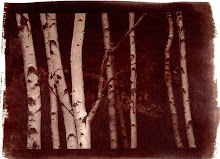
Birch: signifies new beginnings and death of the old
Holly: inspires psychic visions and knowledge of your past lives
Oak: burn oak for healing, wisdom and strength
Pine: brings prosperity and growth
Willow: burn willow to invoke the Goddess and have your desires granted

Keep in mind that the longer your log burns the greater the magickal power you will raise and the more luck you will have in the new year. Traditionally, the log would be burned from Christmas Eve on December 24 to Epiphany on January 6. If you have a fireplace, and to ensure your log will burn for a good long time, choose the fattest log you can find and don't forget to dowse it with cider or ale which will also aid in prolonging the fire. It was believed that if the log fire died out too soon, bad luck would befall those in the household. And as long as the Yule log burns, members of your household and guests should refrain from working (this was part of the sabbat's popularity in former times as slaves and servants were given all the days off that the log continued to burn). This is a time to celebrate and party, not to worry about work!

Write down on small slips of paper all your faults, mistakes and bad choices from the past year and burn them in the fire to purge them from your life and start the new year clean and unburdened.

And lastly, this ancient rhyme may be chanted as you light your Yule fire:

May the log burn,
May the wheel turn,
May evil spurn,
May the Sun return.

Photo courtesy of images by lou on flickr.
Ancient chant of unknown origin courtesy of earthwitchery.com.