Showing posts with label trees. Show all posts

Monday, December 13, 2010

Trees 101: The Yew

Personally, I'm not a big fan of yews as to me their foliage smells too much like cat pee, but that doesn't mean that they aren't a magnificent tree to behold, nor hold a great deal of power within them. This is truly a tree of the Winter Solstice as the yew's spring season begins on the day after the solstice. Given that the darkest time of the year is when this tree begins its rebirth, it's considered a Goddess tree (with the Goddess in her crone form) as well as a tree of death. Ironically, this is also a tree of immortality as being an evergreen, it never seems to die in going dormant. All evergreens are considered to be trees of immortality. In ancient times, yews were traditionally planted in burial grounds as it was believed to be a gateway to the next world.

The yew has been used to make bows, arrows, spears and magic wands. The witches in Shakespeare's Macbeth used wands made of yew to work their magic. Along with the birch and oak, the yew was the third tree in the three pillars of wisdom. The yew is symbolic of stability, sovereignty, and mystery. Yew wood has also been used to make household items such as bowls, shutters, boxes, handles and hooks, and various religious and altar objects. It has been rarely used to make furniture. Yew leaves and bark, as well as the tree's seeds are all poisonous to humans and should never be ingested. However, at one time the skin of yew berries was used as a laxative and a heart medicine. Traditionally, to dream of yews is a portent of death, either one's own or that of a loved one.

The yew vibrates to both masculine and feminine energies. It is ruled by Jupiter, Mars and Saturn and is governed by the elements of air, water and fire. Yew can be used in ritual to enhance psychic abilities, to bring one closer to their ancestors at Samhain, and in protection spells. When using yew in any magickal capacity, remember to never ingest any part of the tree and to wash your hands well after handling it.

"Ancient Yew" courtesy of Giles C. Watson on flickr.

Monday, November 29, 2010

Pagans

Having last month accepted a very large commission for four portraits, I've had very little time for much else, blogging included, but I did manage to spend a few brief hours with friends over last week's holiday: good friends and some fairly newer acquaintances, one of whom turned out to be a practicing witch and pagan (and here I thought I'd be the only one in the room that evening). For the life of me I cannot remember how the conversation over dessert turned to the subject of hymns, but indeed it did, and from there it was a quick hopscotch to paganism. With her husband an Episcopalian, this lovely lady stated how truly beautiful the hymns are in his church, which prompted me to remark on how horrible they are in the faith in which I was raised: Lutheranism (or as I like to call it "Catholic Lite"). There has never been more plodding, heavy, dire, nor depressing music ever composed. If you're looking for a soundtrack by which to commit suicide, the Lutheran Hymnal is the book you want. My new friend laughed loudly and said, "Try growing up Jewish." And this got me thinking.

Though we come from many faiths and backgrounds, is there a common thread that draws people to a life of paganism? True, some are lucky enough to have been raised by multi-generational pagan families, but in today's world, most of us come from a place far, far removed from witchcraft, wicca or paganism. For myself, having always been drawn to the rituals and spirituality of my Native American ancestors despite my rather conservative upbringing, it wasn't a giant departure from my inner beliefs to openly practicing the earth faith I have embraced for many, many years. Still, there is something to be said for the pagan path vs the more conventional spiritual paths society (and family) has to offer.

Paganism as a general rule comes with little or no guilt and certainly with no all-powerful body of (usually) megalomaniacal, egocentric men telling us what we can and cannot do, what is right, what is wrong, what is acceptable and what is most certainly not. The freedom of paganism is not only a beautiful thing in and of itself, but it also allows the follower of this faith to make their own choices when it comes to good vs evil. And most of the gentle folk who call themselves pagans make these choices wisely, far more so than someone who thinks they can make last minute amends for their wrongdoings on their deathbeds. While not all of us follow the path of wisdom in this faith, I find that the majority of us do.

If you took away from me the endless circles I've cast, the powerful spells I've written, the library of books I've amassed, you won't have hurt me in any way because those are not where my spirituality lies. Those are mere adjuncts to a pagan and witchy life well-lived. If all that were gone today, I'd be left with what really matters to me: the four elements, the sun and the moon (especially the moon), the earth including her rocks, trees and herbs, the magnificent ocean, animals, and the gentle touch of the Divine; the Great Spirit in all I do. These are why I left the mind-numbing drudgery that was the faith of my youth and embraced wholeheartedly my free-spirited and compassionate pagan self.

"Beeches and Bluebells" courtesy of the always-brilliant Giles C. Watson.

Tuesday, October 19, 2010

Leaf Lore

There's powerful magick in the fallen leaves on Samhain, but in order for that magick to manifest the leaves must be caught in the recipient's hands as they fall from the trees and before they hit the ground. According to folk tradition, once a leaf has touched the earth, its magick is forever lost. The tradition of catching fallen leaves began in England centuries ago and it was believed that catching a fallen leaf would not only empower the lucky grabber with great magick, but would also ensure that that person would have profound happiness for the next year and would suffer no sorrows (if only it were this easy). Upon catching a leaf, you could also make a wish and be sure by your lucky catch that it would come true. Another folk belief says that the catching of a falling leaf will bring a year of health to the recipient.

An old witch's spell states that for every leaf caught between Michaelmas on September 29th and Samhain, the lucky catcher will be granted one day of pure happiness. But once these leaves are caught, be sure to keep them outside, for an ancient belief states that you will bring very bad luck to your family and all who dwell within your walls should you bring the leaves indoors with you. Dead leaves that may blow into your house on their own through a doorway on a blustery day are perfectly safe though!

This gorgeous photo of falling leaves courtesy of Jooliree on flickr.

Saturday, October 2, 2010

Trees 101: The Maple

When I think of autumn I think of maple trees and all the glorious and vivid colors their leaves turn come the cooler weather. The maple's wood is very hard and pale and very, very strong. Striped maple wood is known as "whistlewood" as its outer bark is easy to peel off and was used to make wooden whistles, musical instruments and violin cases. The tree is also known as "moosewood" as moose very much enjoy nibbling on the tree's tender young shoots in the springtime. As everyone knows, the tree's sap is used to make pure maple syrup (with sugar maples being the most prolific variety) and as the annual "sugaring off" coincides with the vernal equinox, this tree is a popular choice for Ostara celebrations. During the early settling of North America, the maple and its sap figured prominently in the settlers' diets. Surprisingly, the sugar maple was not seen in Britain prior to 1735 and in the beginning was used mainly as a hedgerow tree.

It is said that if you place a bough of maple in your home you will protect it from an infestation of bats. Also, if you pass an infant or young child through the branches of a maple tree, you will bring to the child excellent health and a long life. Maple brings success and abundance.

Maple is used in ritual and spellwork to attract love, to work with the faery realm and the wood is an excellent and powerful choice for wands. In terms of the maple's powers, it aids in communication, grounding, bringing and maintaining balance, longevity, transformation and wisdom, to name but a few of its many abilities. The maple tree's energy is masculine and it vibrates to the elements of air and earth. The maple is ruled by the planet Jupiter.

Photo courtesy of JGrana on flickr.

Tuesday, August 31, 2010

Trees 101: Mesquite

While we're still in the midst of summer and the grilling season, it's the perfect time to discuss mesquite. Known most widely for its use as a firewood to flavor barbecued meats, there is much more to mesquite than its role in creating a yummy steak. The various components of this versatile tree: the flowers, seeds, pods, and hard wood, are used in everything from food to medicine to furniture and flooring.

In spite of the fact that this tree sports very large, sharp thorns, people have successfully harvested mesquite for more than a millennia. The seeds and pods have been used to feed humans with flours, porridges, jellies and even wine. They've also been used to feed livestock as well. The toasted seeds are frequently used in coffee blends and the flowers, which produce a rich nectar that bees go wild for, are used to make honey. Mesquite gum is used in the production of sugars and thickening agents for baking. Medicinally, mesquite can be used to treat respiratory illnesses such as colds, flus and sore throats. It reduces inflammation and eliminates diarrhea.

Native Americans, especially those tribes of the American southwest, fashioned mesquite wood into arrow tips and they also used the gum to decorate their pottery. The tree figured prominently in the Aztec creation myth as well. During the second sun when the universe was being created for the second time (we are presently in the fifth sun, Nanahuatl), Quetzalcoatl, the God of the Winds, created the world and fed his people with the fruits of the mesquite tree.

In ritual and spellwork, mesquite is used to bring success, to increase the power of healing herbs, and in rites where perseverance is essential. Mesquite vibrates to elements of air, fire and water. Its energy is feminine and it's ruled by both the Moon and Saturn.

Photo courtesy of lasertrimman on flickr.

Wednesday, June 30, 2010

Trees 101: Hazel

The hazel is one of the most magickal trees of all as it's the tree that stands at the very heart of the faery realm. In the center of the Otherworld, nine sacred hazel trees stand in a circle around the Well of Wisdom and drop their nuts into the water from their overhanging branches, feeding the Salmon of Knowledge. Hazel was the sacred Tree of Knowledge in many ancient cultures, from the Norse to the Celts to the ancient Greeks. It's no surprise then that this is the tree whose wood is used most often for divination: Druidic wands were always fashioned from Hazel and it's the preferred wood for dowsing and divining rods as well. It's believed that, to this day, hazel works so well as a dowsing rod because it instinctively wants to reconnect with that first ancient well tree in the faery realm.

Want to protect yourself from evil (and especially that most evil thing of all- witches- the handmaidens of the devil)? Craft yourself a shield of hazel or use its wood to carve a protective rod or small wooden talisman. Use it at the dark of the moon in rituals, crafted as a divination tool, or eat hazelnuts before shamanic journeying to increase your psychic knowledge.

The hazel tree is feminine in energy and vibrates to the elements of both air and water. It is ruled by Mercury and the Sun and is one of the nine sacred woods of the sabbat fire in which it represents wisdom. The sabbats for which hazel is traditionally used for are Beltane and, most especially, Samhain.

Photo of this gloriously lush hazel tree courtesy of Argentem on flickr.

Saturday, June 5, 2010

Whiling Away a Summer Afternoon

"Rest is not idleness, and to lie sometimes on the grass under the trees on a summer's day, listening to the murmur of water, or watching the clouds float across the sky, is by no means a waste of time."

-John Lubbock

Photo courtesy of honeybSF on flickr.

Thursday, May 6, 2010

Trees 101: The Beech

Beech trees have a long magickal and medicinal history. Used for centuries in Druidic rituals, forked beech branches are also a great choice to use as a divining or dowsing rod. Associated with rebirth, reincarnation, transformation, and ancestors, beech trees are used as protection against lightning strikes as they are a good conductor of electricity.

Beech is known as the "mother of the woods" and is the Beech Queen to the Oak King, providing shelter to shorter, smaller trees and food for humans and animals. Beechnuts are believed to bring wisdom to those who eat them and are used as protective amulets. They can also be carried or worn as lucky charms. The beech tree is associated with time, wisdom and knowledge. Scratching your name or wish on the bark of a beech tree- either on the tree itself or a piece torn off, written on and then buried- will ensure that your wishes will come true. This simple wishing spell dates back millennia.

Likewise, the bark, leaves, roots and sap all have medicinal properties. Beech is said to cure burns, ulcers and liver problems, as well as tuberculosis. Beech bark and leaves can be used as an astringent and can even be found in many modern skin care products. Beech brings relaxation to those who use it.

Using beech wood in your spellwork will bring stability to your life, will help you bring your intentions to fruition, can be used in cleansing and protection rituals, is a perfect offering for the Goddess(es) you may worship and can be used to contact ancestors in ritual as well. Beech vibrates to a feminine energy as well as to the elements of fire and water and is ruled by the planet Saturn.

Photo courtesy of Kornelis on flickr.

Wednesday, March 17, 2010

Trees 101: Rowan

The rowan is a tree of many mundane and magickal uses most of which revolve around its berries. Songbirds are attracted to them, thus giving the rowan a distinct association with music, poetry and the goddess Brigid. The berries are also used for incenses and spellwork as well as in a medicinal capacity. Rowan berry tea is used to treat intestinal disorders and being high in vitamin C, rowan is also used to fight respiratory ailments. The berries are used in jams, jellies and even wine and in ancient times were believed to grant those who consumed them a very long life.

In 15th and 16th century England, rowan berries were avoided by midwives and herbalists because to be caught with them was certain to get you branded a witch. Ever take a good look at a rowan berry? They have what appears to be a pentagram at their base, thus the belief that anyone who had them in their possession was surely practicing the dark arts.

Wear a sprig of protective rowan and faeries won't be able to kidnap you, despite the belief that the rowan tree originated in the faery realm. Planting a rowan near your front door will protect your home from evil spirits and lightning strikes. Rowan is one of the nine sacred woods of the sabbat fire and represents life.

The versatile rowan tree is excellent for protection rituals, safe astral travel, divination spells (its sticks were traditionally used to make runes) and to enhance psychic abilities, as well as in powerful healing spells. It vibrates with a feminine energy and to the elements of both earth and fire. It's ruled by the planets Saturn and Uranus, as well as the Moon and Sun.

Friday, February 5, 2010

Trees 101: Brambles and Vines

While we may not consider brambles and vines trees according to the modern definition of what constitutes a tree, the ancient Celts classified anything with a woody stem or stalk just that. Consider blackberry or grape vines, or even ivy, for example. Vines tend to grow in the shape of a spiral and the spiral is symbolic of the Goddess and the unending continuation of life. Wine, essential to so many rituals, is made from blackberries and grapes. Imbolc is the Goddess Brigid's sabbat and it is customary to use blackberry wine in rituals for this sabbat and anytime you choose to honor her.

One of the nine sacred woods of the sabbat fire, vine represents joy. It has many medicinal uses. The leaves of the blackberry vine may be dried and made into a tea used to cure gout and the leaves may also be used in a poultice to treat burns. If you find a bramble bush with a natural arch to it, crawl through the arch backwards and then forwards three times, going as close to east to west as you possibly can, and you will be cured of boils, acne, whooping cough and rheumatism. Grapes (and raisins) increase fertility and hone mental powers.

Dreaming of blackberries or grapes that are still on their vines means abundance, success and prosperity. As such, use blackberries in spells to increase wealth. Grapes may also be used for money spells. Place a bunch of them on your altar while working your magick.

Vines and brambles vibrate to a feminine energy and the element of water. They are ruled by the planet Venus and the Moon. Use these plants in rituals to enhance psychic abilities and deepen levels of conciousness, for grounding, for celebration and to access the faery realm.

Photo courtesy of photofinger on flickr.

Monday, January 18, 2010

And So Thinks the Witch

"The tree which moves some to tears of joy is in the eyes of others only a green thing that stands in the way. Some see nature all ridicule and deformity...and some scarce see nature at all. But to the eyes of the man of imagination, nature is imagination itself."

-William Blake

Photo of the oak tree near Ashdown House courtesy (once again) of the amazing Giles C. Watson on flickr.
Monday, January 4, 2010

Trees 101: The Holly

Holly is one of those rare plants that remains green and thrives this time of year when all is sleeping or dead, and as such deserves its reputation (along with oak) as one of the two most magickally powerful trees. It is the power in these two woods that spawned the legend of the Oak King and the Holly King as oak thrives during the warmer, lighter half of the year and holly in the darker months of cold. But holly is in fact symbolic of the Goddess, with its red berries representing the blood of life she bestows on us. It is one of the nine sacred woods of the sabbat fire and represents, through the Goddess, justice.

Holly is used for protection against witchcraft, evil spirits, mischievous sorcerers, poison and lightning and having holly in your home, especially at the new year, is guaranteed to bring luck and safety to your house and all who dwell within. Keep a small sprig of it in your home throughout the year to manifest its protective properties continually. It's lucky for a man to carry a bit of holly on his person as holly is a "male" plant in contrast to ivy which is "female." Holly berries can be used to predict winter weather. If you see holly bushes with an abundance of berries, it's sure to be a harsh winter as the Goddess is guaranteeing an ample food supply for our wild friends, both furry and feathered. If you are startled by a wild animal while out walking in the woods, throw a sprig of holly at it and it will lie down quietly and leave you alone, even if you don't actually hit the animal!

Holly can be used medicinally to fight fevers and to stop jaundice and it is used to enhance dream work. Dreaming of holly means that you must attend to that which troubles you, but picking holly leaves in a dream means you will live a long life. On a Friday after midnight, and in total silence, gather nine holly leaves, wrap them in a small white cloth using nine knots to tie it closed and place it beneath your pillow. Your dreams will be sure to come true.

Holly is ruled by both Mars and Earth and vibrates with a masculine energy to the elements of earth, air and fire.

Photo courtesy of Tollen on flickr.

Thursday, November 12, 2009

Trees 101: The Hawthorn

The hawthorn is a very powerful tree, spiritually, medicinally and magickally. Its use in remedies dates back to the ancient Greeks, and its use as a good luck charm and symbol of hope and happiness dates back to this same period. In England it was used to make garlands for Beltane and collecting dew from the leaves and branches of this tree is said to ensure lasting youth and beauty to those on which it is sprinkled.

Hawthorns are frequently found near holy wells and on ground considered to be sacred and as a result are frequently seen with offerings left at the base of their trunks and decorations hung amongst the branches. The hawthorn is known as the wishing tree and there are many famous ones throughout the world that to this day have wishes, requests and prayers hung on them or coins driven into their trunks.

Along with oak and ash, hawthorn is the third tree of the powerful triad of trees inhabited and enchanted by faeries. Hawthorns represent the three realms: the underworld, the middleworld and the upperworld, as well as being symbolic of the three stages of the witch: the maiden, the mother and the crone. The hawthorn is one of the nine sacred woods of the sabbat fire as it represents purity.

The hawthorn is associated with the planet Mars, vibrates to a masculine energy, and is ruled by the elements of air and fire. Wear hawthorn for luck and happiness on your wedding day or use it to cleanse an area before ritual. It can used for spells that open the doorway between the mundane world and the faery realm, to attract love, in protection spells, to attract love and to commune with the spirits of those who have passed before us.

Sunday, October 11, 2009

Hawthorn Samhain Lore

Never sleep or rest on the ground beneath the boughs of a hawthorn tree on Halloween as it's believed that evil spirits and mischievous faeries who are roaming the earth that night hide within the branches of hawthorn trees and cast unpleasant spells on those who innocently stop to rest beneath them.

"Faerie Hawthorne" photograph by the brilliant Giles C. Watson on flickr. Check out his work, I promise you won't be disappointed!

Tuesday, September 29, 2009

My Future Besom (Again)

Well, I've finally gotten around to choosing a handle for my soon-to-be besom (see "My Future Besom" August 13, 2009) and ironically enough, I didn't even need to leave my yard! I never quite found the time this summer to take a hike through the local woods to find an old oak branch and I'd been getting antsy about it. Then yesterday afternoon while out beneath my more than a century old apple tree, I happened to glance up through the branches and there it was: the perfect handle. As I said before, I've gathered all my birch twigs for the brush end of the besom over the last few seasons only from twigs my trees have dropped and I was planning on doing the same for the handle as I would never harm a tree for my own personal use. My apple tree had three good-sized sucker branches high up in a neat little row that were going to need to be removed before winter anyways and the middle of the three was exactly the right length and diameter for my besom. The ever-helpful Griffin got out a ladder and climbed up with a hand saw and moments later my handle was right there in my hands. I spent the next couple of hours cutting all the little branches off, pruning down the nubby bits and then peeling all the bark from the branch, exposing the lovely apple wood. It's now sitting in my kitchen beginning to dry out and when it's dry enough, I'll be able to make my besom. It's about four and half feet long, with a gentle curve as it thickens towards what will be the handle end. I haven't yet decided whether to sand the crap out of it when it dries or to leave just as they are all the bumpy bits from its former little branches for a more rustic look. Hopefully, despite my inability to make a firm decision on anything, I'll have decided by then which look I prefer for my handle.

Sunday, August 23, 2009

Trees 101: The Apple/Crabapple

Apples are an ancient fruit and have long been used in magick. The apple, as everyone knows, was represented in the story of Adam and Eve and is also associated with the Great Mother Goddess. In the folk tales of many cultures, eating an apple opened the gateway to another realm for the lucky person consuming the fruit. Apples symbolize illumination and knowledge and apple wood is believed to make a very powerful wand.

Apple is one of the nine sacred woods of the sabbat fire in which it symbolizes love. Apples are a common ingredient in Pagan ritual and spellwork. Slice an apple in half across its middle and what will you find? The seeds laid out in the shape of the pentagram. Apples are given as offerings to the dead at Samhain to aid them in the process of rebirth. And the game of bobbing for apples at Halloween was first played in ancient times: if you were lucky enough to win, it meant that you would be blessed by the Goddess for a full year.

Apples bring prosperity and the good life and are believed to be good for the digestion.

The apple tree is ruled by Venus and the goddess and its energy is feminine. Apple vibrates to the elements of both air and water. Besides being used for prosperity and a healthy tummy, apples can be used to attract a lover, to cross over into the faery realm and to foster strength and protection.

Thursday, August 13, 2009

My Future Besom

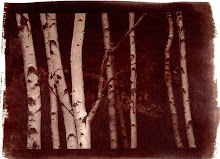
Back in 2003, David and I planted six 15 foot birch trees, each with multiple gnarly trunks, in a small grove at the back of our property where we abut a wetland. The trees love it there in the sun, and with their feet perpetually wet and happy our little grove has grown to unbelievable heights in just six short years. The trees are close to double their size and are lush and full, with the tips of their branches beginning to touch, like old acquaintances gently reaching out to greet one another. I adore walking through them, with the sun dappling their leaves (and my head) and their pale pinkish bark peeling so beautifully from their crooked trunks (I save it, tree nerd that I am). If I have any complaint, it's the damn mosquitoes back there, courtesy of the water, that are so thick you feel as though you're walking through a living, buzzing black haze. But even the bugs and their itchy welts can't keep me from my beloved birches, my favorite tree of them all (and that's saying something since I simply adore all trees). But, as usual, I digress.

I would never pull a living branch from a tree, but I have for the last few years been gathering the slender fallen twigs from my birches in the hopes of one day having enough to make a nice full besom to use as a ceremonial energy cleansing broom for circle. And after all this time, all that patient gathering and waiting (and just itching to pluck some lovely little shoots from my living trees to speed up the process) I finally have just about enough birch twigs to make the brush of my besom.

I still need a handle though and wish to make that part of the besom from an oak branch. A few months ago when I said that I had just about enough birch to get started (and on one of our many trips to Home Depot even picked up what I thought was just the right natural twine for binding it), David, on a solo Saturday morning walk, picked up three or four lovely and fat oak branches he found on the ground and brought them home for me. And as much as I loved him for it, and also loved the branches, I just couldn't bring myself to consider any of them for my besom. I really need to go and find the branches myself, to feel their energy calling to me, to instinctively know which one is the right one for my needs. And so I still need to take a walk of my own through the woods and find my oak handle for myself.

But my besom is coming soon, very soon. My years of gathering are finally coming to fruition and then I will finally have it made and it will be wonderful! And every time I hold it in my hands, I'll feel the life force and energy of my precious birches and think of all that has come to pass during the time I have spent collecting their many branches: seasons changing, family changing (children growing older, a beloved pet passing and two new ones joining us) happiness felt, sorrow endured, and in spite of it all, life always, always marching forward. This besom will hold a lot of power to push the negative energy from our humble home.

Stay tuned for photos of my besom!

Sunday, June 28, 2009

Trees 101: The Fir

Fir trees are known as the "birth tree" and are used in protection spells for mothers and children. A few needles may be burned during childbirth to ensure a safe birth for both mother and baby. It is the fourth of the nine sacred woods of the sabbat fire, representing friendship. The fir symbolizes the Great Mother Goddess due to its seeming immortality (as it doesn't "die" in the winter months as do other trees and plants). Native to only the northern hemisphere, the fir is traditionally used as decoration during the winter as it is symbolic of life and thus represents abundance in the coming year. For this reason it has been used since early times at Beltane and Yule. Sensitive to the elements, fir cones respond to the sun and rain by opening and closing with each.

Native Americans used many parts of the fir tree as medicine, and even today the fir can be used to treat cuts, burns, coughs and colds and even constipation due to its laxative effects.

The fir is associated with Mars and Saturn and while its energy is essentially masculine, it is associated with both the God and the Goddess. The fir tree vibrates to the element of air and as well as being used for protection and medicinal purposes, can also be used for attracting prosperity, in divination work and to promote personal change.

Friday, May 15, 2009

Trees 101: The Willow

My mother and I were talking about trees yesterday and I told her how much I loved to sit beneath the large old willow in the backyard of my childhood home, to which she replied that my father would never have planted a willow tree as it is symbolic of death and when one plants a willow, someone you love will die. While this isn't exactly true, the willow was a popular image engraved on Victorian headstones and along with the nickname of "weeping willow" is frequently thought of when it comes to the subject of death.

Instead of bringing death and misery, the willow can actually alleviate sadness and darkness and when one sits beneath its long embracing branches, will find their energies calmed. Willow is a favored wood for wands due to its flexibility. Native Americans wove their baskets and fishing nets from willow because of that flexibility. Medicinally, willow has been used to treat headaches and fevers by use of the leaves, bark and wood of the tree. To conjure spirits mix ground willow bark with sandalwood. The traditional besom, usually made of birch, is bound with willow branches.

The willow is the third sacred wood for the sabbat fire and, not surprisingly, it represents death. The tree is associated with the moon and thus the Goddess, giving it feminine energy. It's a magickal tree that vibrates to the elements of water and fire. The willow is the traditional tree of Samhain.

Friday, April 24, 2009

Tree Day 2009

Today is Arbor Day, which is always celebrated on the last Friday in April. Although it might not be exactly accurate to refer to the observation of Arbor Day as a "celebration", it is just that for those of us who adore trees and Mother Earth and wish to keep her as healthy as possible and show her all the respect she deserves.

In the words of Julius Sterling Morton, the man who founded Arbor Day (which on the first observed Arbor Day on April 10, 1872, it's believed that one million trees were planted, by the way) “Arbor Day is not like other holidays. Each of those reposes on the past, while Arbor Day proposes for the future.”

You said it, Mr. Morton.