Showing posts with label verbena. Show all posts

Friday, April 22, 2011

Healing Spring Allergies

I've suffered from spring allergy symptoms for years, with the exception of two all-too-brief years when I was working with a healer from China who made me feel like I was superhuman and physically invincible (man, do I miss him). I really don't like to take any medicine, unless I'm practically dying and nothing else has worked, because I'm not a fan of chemicals and additives. Fortunately, there are a lot of things you can do to ease the discomfort and the pain of seasonal allergy symptoms and not compromise your health in other ways to do so.

Butterbur has been used as an anti-spasmodic and to heal headaches and asthma symptoms since ancient times, making it ideal for allergy relief. A teaspoon of the root can be boiled in a cup of water and drank as a tea or drops can be used as a tincture. Much safer and easier to use, a supplement form of butterbur can be found in most natural food stores. Unfortunately, as most seasonal allergy sufferers are allergic to ragweed, be forewarned that this herb is in the ragweed and marigold family so use caution if you're sensitive to the plants in this family.

Extract of stinging nettle leaf (not the root, which is used to heal prostate issues) can be effective in reducing a runny nose and post-nasal drip, as can a supplement containing a combination of elderflower, sorrel, cowslip, verbena, and gentian root. Feverfew, ginkgo biloba, ginger, kava kava, and valerian have all been used to help heal headaches. Take a supplement of one of these herbs or use drops in a tincture. You can also make a ginger tea with fresh, thinly sliced root placed in boiling water and sipped.

Healing gemstones can be used as an adjunct to herbal remedies. Aventurine is an excellent stone for healing allergies. It has an anti-inflammatory effect on rashes, migraines and eye inflammation, as well as being effective in treating the lungs, throat and sinuses. A piece of polished amethyst can be held against the forehead to help heal a sinus headache, bringing soothing relief quite rapidly. It also calms the lungs and allergies affecting the respiratory system. Golden obsidian is a great stone for general allergy symptoms, as is clear blue sapphire. Fluorite is great for healing sinusitis.

Please note that if this is the first time you'll be using any of these herbs, it is best to be sure you are not allergic to them before you ingest them. If you are allergic to any similar plants, avoid those within the same family. If you are at all unsure, please consult a physician before using. As always, use common sense when working with herbs. Take nothing internally without being absolutely sure it's edible and safe and use nothing that you feel you may be allergic to. Always consult a physician if you aren't feeling well and remember: I am not a doctor and thus cannot diagnose nor treat any condition. Use caution and feel better soon!

Photo of butterbur plant courtesy of steb1 on flickr.

Monday, October 11, 2010

The Nurturing Bath

There's nothing quite so relaxing as a nice hot bath, accompanied by the gentle glow of light from a bathroom full of lit candles. In addition to bathing the body, baths can be ritually cleansing to prepare for the sacred circle, emotionally cleansing to free the mind of stress and troubles, and physically healing to free the body of toxins and negative conditions. Aromatic remedies are among the most ancient. Old herbal texts prescribed the calming scents of thyme and sage leaf to ease the terror of nightmares (known as "night ghosts") and bald men were told if they washed their heads with sage tea they could be assured that their hair would indeed grow back. While this last one may not be true, herbal bath remedies can cure much that ails us.

Basic Bath Time Herbal Tea Bags

1/2 cup fresh grated ginger root
2 tablespoons of one or more of the following herbs (or use your own favorites):
lemon verbena (dried)
rosemary sprigs (fresh or dried)
peppermint or spearmint leaves (fresh or dried)
chamomile (dried)
lavender blossoms or sprigs (dried)
lemon balm (dried)
sweet marjoram (dried)
grated goldenseal root (dried)
plaintain leaves (dried)
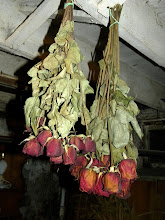
rose petals (fresh)

You may use a small cheesecloth bag tied with a string, or make small folded rice paper packets (in the style of a store-bought tea bag), stitched closed. Combine the ginger root with the herbs of your choice and place in the sachet style of your choice. Run a very hot bath, add a few small bags, allow them to steep while the water cools a bit, then remove the bags and climb on in. Made as small tea bags with strings, these make wonderful gifts to give to someone who loves herbal baths (just be sure to label your ingredients so your recipient knows what's in them and let them know these aren't to be consumed internally).

If you haven't the time or motivation to make yourself bath time tea bags, a simple herbal bath will also work wonders and feel great. You can add sprigs of fresh rosemary to your bath for a pine-like fragrance. Actual pine needles can be used as well which are said to relieve nervous tension. Rosemary is not only invigorating, but will ease physical aches and pains and can rejuvenate a tired, sallow complexion. Ginger root will break a fever, induce sweating, improve your circulation and will also ease sore joints and tired feet.

Native Americans took sponge baths decocted with verbena leaves to combat nervousness and tension. Calendula, comfrey and chamomile used separately or together will also calm nerves and are an excellent choice as an astringent bath for oily or blemished skin. Chamomile is also an effective cure for soothing hemorrhoids.

Elder flowers steeped in hot water will make a gently cleansing and sweetly floral scented bath that will help induce sleep and relax the nerves, as will lemon balm, which in addition to being a sleep aid can also help to relieve cramps.

To soften the skin and counteract both hard water and some of the stronger herbs, add some milk to your bath (Cleopatra bathed regularly in camel's milk and she had men falling at her feet).

Please note that if this is the first time you'll be using any of these herbs, it is best to perform a 24 hour skin test beforehand for each plant. Take a small amount of the herb to be used, pulverize it and if it's in dried form add a few drops of water to moisten it. Dab the paste onto your forearm just inside your elbow, cover with a band-aid and let it sit untouched for 24 hours. If any redness, itching or swelling occurs, do not use that herb. As always, use common sense when working with herbs. Take nothing internally without being absolutely sure it's edible and safe and use nothing that you feel you may be allergic to.

Photo courtesy of floraleads.com